Smart Farm IoT: From Sensor to Dashboard
A practical look at connecting field devices, location data, satellite status, and operator dashboards for smart agriculture workflows.
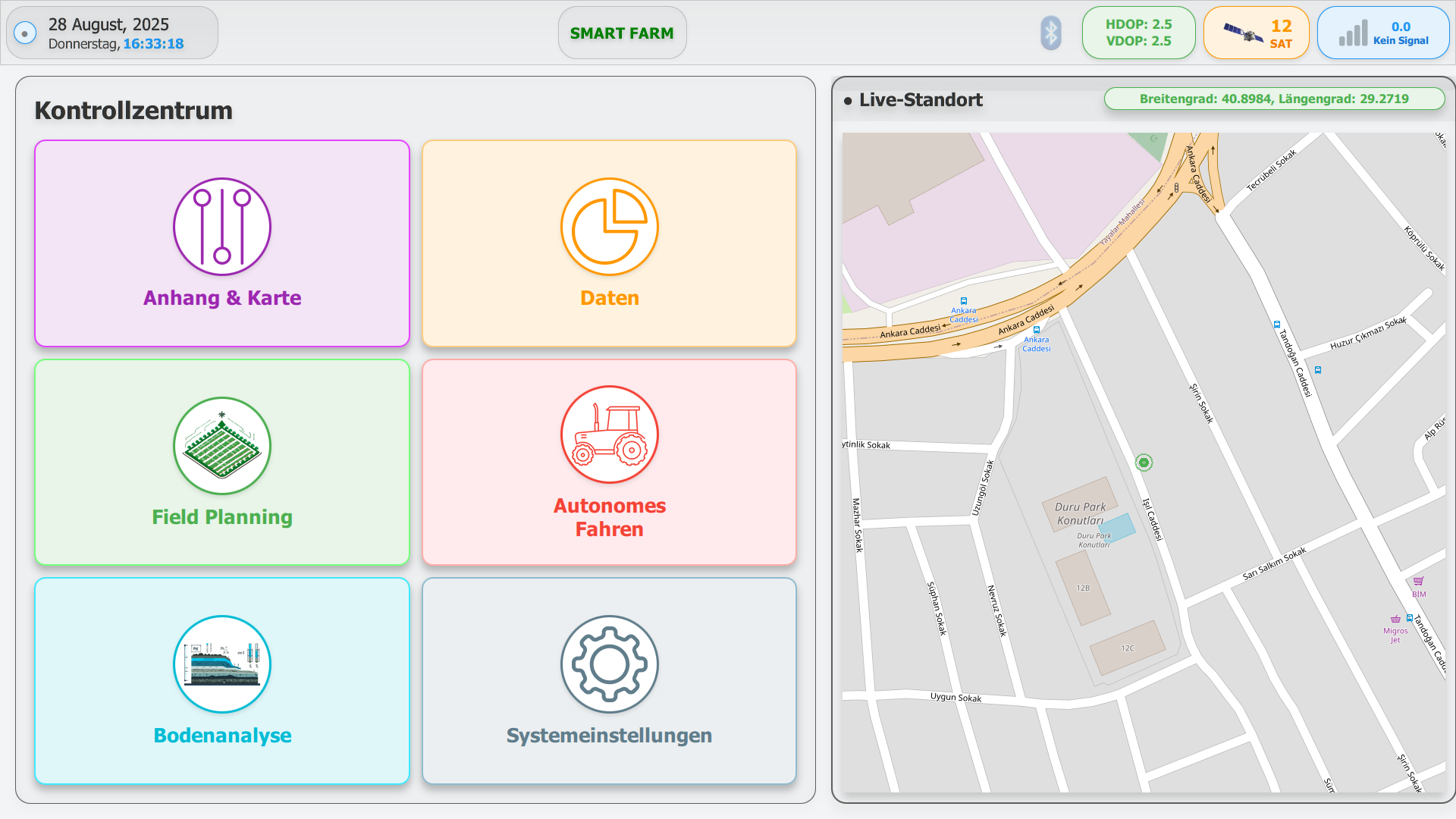
Smart agriculture systems need more than a map and a few sensor values. They need a reliable chain from field hardware to operator screens: location, connectivity, satellite status, device health, measurements and commands must all be understandable at the same time.
Designing around field reality
A farm dashboard has to work with moving equipment, unstable connections and outdoor conditions. That changes the architecture. Devices should keep collecting locally, synchronize when possible, and make critical status visible without requiring the user to search through menus.
The data flow
- Device layer: sensors, Bluetooth/GNSS modules and embedded controllers collect field signals.
- Edge layer: local software validates readings and keeps essential actions available offline.
- Cloud layer: LXPCloud stores telemetry, user actions and device history.
- Interface layer: the dashboard turns raw readings into location, status, alerts and next actions.
Why the dashboard is part of the system
The Smart Farm interface shown here is not decoration. It is the operational surface where users understand satellite count, signal quality, current coordinates and available control modules. Good IoT design makes these states obvious before the user needs to troubleshoot.
What LexpAI builds
LexpAI combines embedded development, mobile interfaces and cloud telemetry so agriculture products can move from prototype to field-ready systems. The goal is simple: less hidden complexity, more dependable information, and software that helps teams act while they are still in the field.
The Internet of Things (IoT) has become a cornerstone of modern industrial automation, enabling factories to achieve unprecedented levels of connectivity, monitoring, and control. However, building IoT systems that can scale to handle thousands of connected devices while maintaining reliability and performance is a complex challenge.
The Challenge of Scale
Modern smart factories can have tens of thousands of connected devices, each generating data that needs to be collected, processed, and acted upon in real-time. This creates several challenges:
- Network congestion: Managing bandwidth for thousands of simultaneous connections
- Data processing: Handling massive volumes of sensor data
- Security: Protecting a large attack surface
- Reliability: Ensuring system uptime with many potential failure points
Architecture Principles for Scalable IoT
To build IoT systems that can scale effectively, it's essential to follow certain architectural principles:
1. Edge Computing
Edge computing moves data processing closer to the source, reducing latency and bandwidth requirements. In IoT systems, this means:
- Processing data at the device level when possible
- Using edge gateways to aggregate and filter data
- Implementing local decision-making capabilities
- Reducing the load on central servers
2. Microservices Architecture
Breaking down IoT applications into microservices allows for:
- Independent scaling of different components
- Easier maintenance and updates
- Better fault isolation
- Technology flexibility for different services
3. Message Queuing
Message queuing systems like MQTT, AMQP, or Kafka are essential for handling high-volume, asynchronous communication between IoT devices and backend systems. They provide:
- Reliable message delivery
- Load balancing and buffering
- Decoupling of producers and consumers
- Support for different quality of service levels
Device Management and Provisioning
Managing thousands of IoT devices requires robust device management capabilities:
Automated Provisioning
Devices should be able to register themselves automatically when connected to the network. This includes:
- Secure device authentication
- Automatic configuration download
- Firmware version management
- Certificate and key management
Remote Monitoring and Control
Centralized monitoring and control systems should provide:
- Real-time device status monitoring
- Remote configuration updates
- Firmware over-the-air (FOTA) updates
- Diagnostic and troubleshooting tools
Data Management and Analytics
Effective data management is crucial for scalable IoT systems:
Data Ingestion
High-throughput data ingestion systems must handle:
- Multiple data formats and protocols
- Data validation and quality checks
- Load balancing across multiple ingestion points
- Backup and recovery mechanisms
Time-Series Databases
IoT data is inherently time-series in nature. Specialized databases like InfluxDB, TimescaleDB, or ClickHouse provide:
- Efficient storage and retrieval of time-series data
- Data compression and retention policies
- Fast aggregation and querying capabilities
- Horizontal scaling for large datasets
Security Considerations
Security is paramount in IoT systems, especially at scale:
Device Security
Each IoT device should implement:
- Secure boot and firmware validation
- Encrypted communication channels
- Certificate-based authentication
- Regular security updates
Network Security
Network-level security measures include:
- Network segmentation and VLANs
- Intrusion detection and prevention
- Traffic monitoring and anomaly detection
- Access control and authentication
Performance Optimization
Optimizing performance at scale requires attention to several areas:
Caching Strategies
Implementing effective caching can significantly improve performance:
- Device state caching
- Configuration caching
- Analytics result caching
- Distributed caching across multiple nodes
Load Balancing
Load balancing ensures even distribution of load across system components:
- Device connection load balancing
- API request load balancing
- Database query load balancing
- Processing pipeline load balancing
Monitoring and Observability
Comprehensive monitoring is essential for maintaining system health at scale:
- Infrastructure monitoring: CPU, memory, network, and storage usage
- Application monitoring: Response times, error rates, and throughput
- Device monitoring: Connectivity, battery life, and sensor readings
- Business metrics: Production efficiency, quality metrics, and cost savings
Best Practices for Implementation
When implementing scalable IoT systems, consider these best practices:
- Start small and scale gradually - Begin with a pilot project and expand based on lessons learned
- Use open standards - Implement widely-adopted protocols and standards for interoperability
- Plan for failure - Design systems with redundancy and fault tolerance
- Monitor everything - Implement comprehensive logging and monitoring from day one
- Security by design - Integrate security considerations into every aspect of the system
Conclusion
Building scalable IoT systems for smart factories requires careful planning, robust architecture, and attention to detail. By following the principles outlined in this article, organizations can create IoT solutions that not only meet current needs but can grow and adapt as requirements evolve.
At LexpAI, we specialize in developing scalable IoT solutions that help industrial organizations achieve their digital transformation goals. Our expertise in embedded systems, cloud platforms, and data analytics enables us to create IoT systems that deliver real business value while maintaining the reliability and performance required in industrial environments.